Where the TRV66 Sits in Sony’s Hi8 Lineup
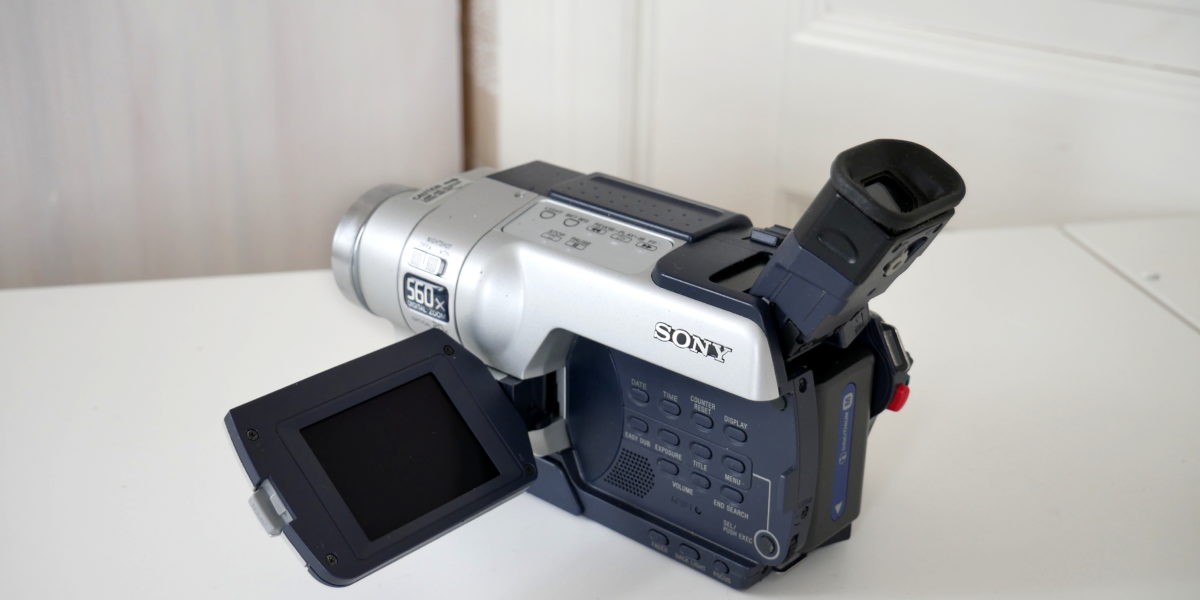
The Sony CCD-TRV66 occupies a specific tier in Sony’s mid-to-late 1990s Hi8 Handycam lineup: above the entry-level models (CCD-TRV41, TRV51) and below the feature-premium TRV9x series. That positioning defines what the camera includes and what it doesn’t. The TRV41 and TRV51 were budget Hi8 cameras with fewer manual controls and lower zoom ratios. The TRV66 stepped up with a 20x optical zoom, SwivelScreen LCD, NightShot infrared, and SteadyShot electronic stabilization. The TRV9x series — TRV91, TRV93, TRV99 — was the premium tier with larger optical zooms, more manual override controls, and enhanced NightShot sensitivity.
The TRV66 was one of the last fully-specified Hi8 models Sony produced before shifting its consumer lineup toward Digital8 (launched 1999) and eventually abandoning Hi8 as a recording format. Buyers who purchased a TRV66 in 1997–1999 were getting a capable Hi8 camera at exactly the moment the format was peaking before being superseded.
Key Specifications
| Feature | Specification |
|---|---|
| Video Format | Hi8 and Video8 (records and plays Hi8; plays Video8) |
| Optical Zoom | 20x |
| Digital Zoom | 360x |
| Image Sensor | 1/4-inch CCD, approximately 330,000 total pixels |
| Resolution | 440 lines horizontal (Hi8 recording) |
| Viewfinder | Color LCD, 2.5 inches, SwivelScreen |
| NightShot | Yes — near-infrared LED illumination, 0-lux recording |
| Image Stabilization | SteadyShot (electronic) |
| Battery | InfoLithium NP-F series |
| Weight | Approximately 860g with battery |
| Audio | Stereo, with LaserLink wireless audio capability |
Specification note: The CCD-TRV66 features approximately 330,000 total CCD pixels. The NightShot system is an analog infrared illumination system — near-infrared LEDs illuminate subjects, and the CCD responds to near-IR wavelengths when the IR-cut filter is disabled. The result in total darkness is a greenish-tinted, usable image at short range (up to approximately 3 meters in zero-lux conditions). This is standard NightShot, not the Super NightShot found in the TRV99 — the TRV99’s system is significantly more sensitive.
TRV-Series Lineup Context
Sony’s TRV numbering in the late 1990s was a deliberate feature ladder. Understanding where the TRV66 sits requires the full picture:
- CCD-TRV41, TRV51: Entry Hi8. 16x optical zoom, no SteadyShot on some variants, smaller LCD. Budget options.
- CCD-TRV62, TRV65, TRV66: Mid-tier Hi8. 18–20x optical zoom, SteadyShot, SwivelScreen 2.5-inch LCD, NightShot. The TRV66 was the top of this tier.
- CCD-TRV67, TRV68: Transitional models with Video8/Hi8 playback compatibility and similar specification to the TRV66.
- CCD-TRV91, TRV93, TRV99: Premium Hi8. Higher zoom ratios (up to 25x), enhanced NightShot (Super NightShot on the TRV99 with 16x sensitivity versus standard NightShot), more manual controls.
The TRV66 is the model to choose for a complete Hi8 specification without the TRV9x price premium. Its 20x zoom, SteadyShot, NightShot, and InfoLithium battery cover every major feature category. What it lacks versus the TRV9x models is the enhanced low-light sensitivity and extended Super NightShot range.
Video Quality
The Hi8 format delivers approximately 400–440 lines of horizontal resolution — the TRV66 tests at 440 lines in camera, dropping to around 380 lines in playback, consistent with Hi8 performance expectations. In good lighting (500 lux and above), the footage is clean with accurate color. The 1/4-inch CCD with 330,000 pixels performs well in the 200–1000 lux range that covers most interior events. Below 100 lux, noise becomes visible; below 20 lux, NightShot activation provides usable footage in the greenish near-infrared mode.
The 20x optical zoom is a capable reach for a consumer Hi8 camera. SteadyShot’s electronic stabilization crops the image slightly but delivers meaningful shake compensation at long focal lengths. Sony’s SteadyShot on the TRV66 is electronic — using CCD overscanning to compensate for shake rather than moving optical elements — which means it works best for gentle camera movement rather than significant jolts.
The TRV66 as One of the Last Hi8 Models
The CCD-TRV66 was produced through the late 1990s, and Sony’s subsequent releases made its format evolution increasingly visible. The DCR-TRV103 (1999), Sony’s first Digital8 camera, recorded DV-quality video on the same Hi8 and Video8 cassettes the TRV66 used — but at 500 lines of DV-codec resolution rather than Hi8’s 440 lines. Digital8 cameras also played back Hi8 and Video8 tapes, making them backward-compatible upgrades. By 2000, Sony’s consumer camcorder advertising centered on Digital8 and MiniDV, and the Hi8 TRV line ended production.
For anyone with TRV66-recorded Hi8 tapes today, the TRV66 itself is the correct playback device. Its head geometry and servo tuning are calibrated for the recordings made on it. Digital8 cameras can also play Hi8 tapes, but a well-maintained TRV66 is the native player for TRV66 material.
Common Issues and Maintenance
- Tape jamming: The most common TRV66 failure mode. Regular head cleaning with a cassette-type cleaner prevents oxide buildup. Tapes stored for years should be fast-forwarded and rewound before playback to even out tape tension.
- Battery degradation: Original InfoLithium NP-F packs from the late 1990s have typically lost significant capacity. Third-party NP-F550 replacements are available. The InfoLithium charge readout requires InfoLithium-compatible chemistry to display accurate time remaining.
- Fuzzy playback: Usually dirty record/playback heads. A wet-type head cleaning cassette, used briefly, resolves most playback quality issues.
- Focus issues: Clean the lens with appropriate optics cloth. In low-contrast scenes, manual focus override via the lens ring provides more reliable results than autofocus.
Verdict
The Sony CCD-TRV66 is a complete mid-tier Hi8 specification: 20x zoom, SteadyShot, NightShot, SwivelScreen LCD, and InfoLithium battery in a well-built body. It sits correctly between the TRV51’s budget compromises and the TRV99’s premium features. Its limitations versus the TRV9x models are real but minor for typical use — the primary gap is the TRV99’s Super NightShot sensitivity, which matters only for dedicated low-light or infrared recording. The TRV66’s limitations versus Digital8 and MiniDV that followed are more significant: Hi8’s 440-line analog format is a ceiling, and the tape mechanism requires maintenance that digital formats avoid. For the Hi8 format itself, the TRV66 is a reliable, fully-equipped representative of what Sony’s Hi8 line achieved at its best price-to-feature ratio.