Overview
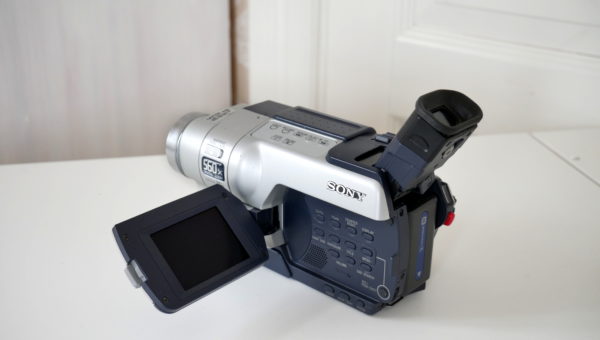
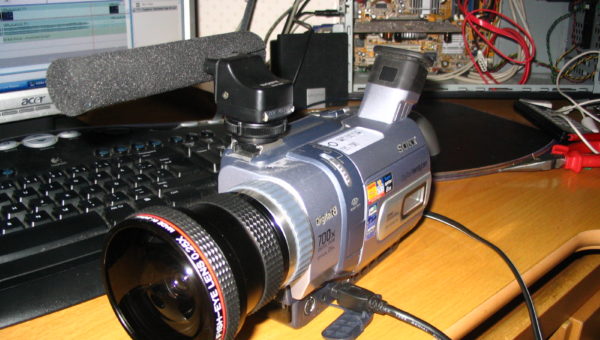
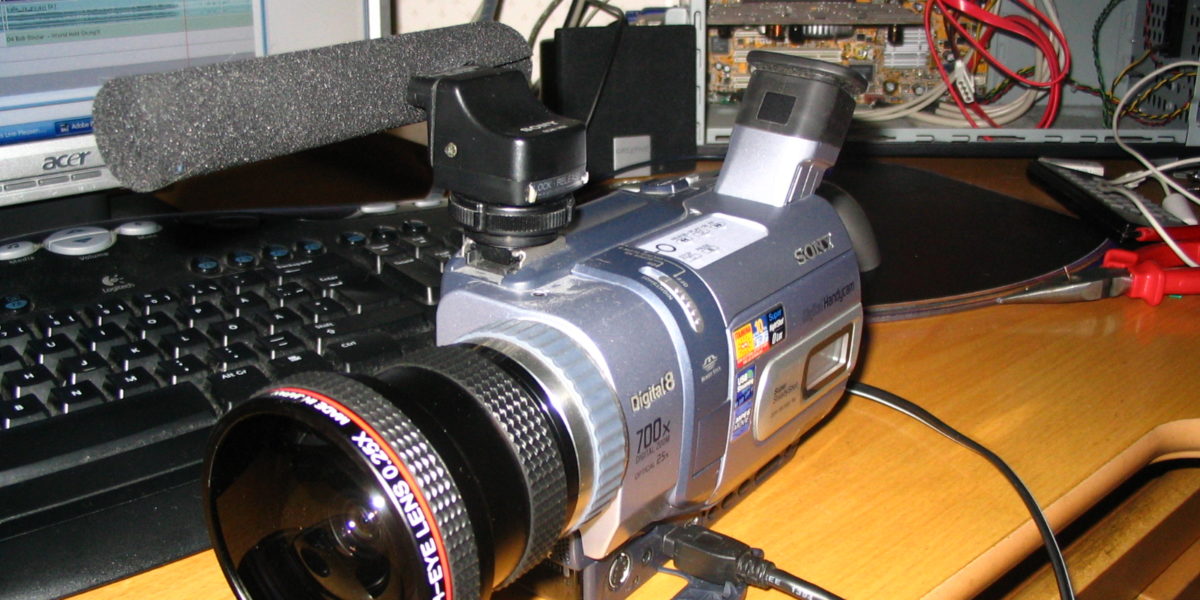
For retro video enthusiasts, the Digital8 format holds a specific position in camcorder history: a Sony-exclusive format that used analog Hi8 and Video8 cassettes while recording a full DV-codec digital signal. The Sony DCR-TRV series spans the full Digital8 product range from 1999 through the early 2000s, covering everything from entry-level budget models to near-professional three-chip designs. Understanding the series requires knowing which specific models you’re looking at, because the hardware differences between a DCR-TRV250 and a DCR-TRV900 are substantial.
Key technical facts about Digital8:
- Same codec as MiniDV: Digital8 uses the identical DV codec (25 Mbps, 4:1:1 chroma sampling NTSC) as MiniDV format. Digital8 is frequently and incorrectly described as lower quality than MiniDV — this is false. Video quality is determined by the camera’s CCD and lens, not the tape format designation.
- Tape recording time: Digital8 runs tape at twice the speed of Hi8. A 120-minute Hi8 tape provides only 60 minutes of Digital8 recording in SP mode. This is commonly misunderstood.
- Legacy tape playback: All DCR-TRV Digital8 camcorders can play back Hi8 and Video8 tapes in addition to Digital8 recordings. This backward compatibility made Digital8 cameras the standard tool for digitizing analog 8mm tape libraries.
- Launch year: Digital8 launched in 1999, not 1998 as some sources claim.
The Models: First Generation (1999)
Sony launched Digital8 in 1999 with a specific set of models. The first-generation DCR-TRV series used consistent hardware across several models:
- DCR-TRV103: First-generation flagship, 1/4-inch CCD (460,000 pixels gross, 290,000 effective), 20x optical zoom, SteadyShot, NightShot. Built-in speaker and 2.5-inch LCD.
- DCR-TRV120: First-generation mid-tier, similar CCD specification to the TRV103, 20x optical zoom, slightly smaller form factor.
- DCR-TRV310, TRV510: First-generation models sharing the same 460,000-pixel 1/4-inch CCD and 20x zoom. The TRV510 added a larger LCD screen.
The Models: Second Generation (2000–2001)
Sony’s second Digital8 generation arrived in 2000 with updated models and a critical split in CCD specifications that distinguishes budget from premium models:
- DCR-TRV250: Budget tier. 1/6-inch CCD (3mm type), 460,000 gross pixels, 20x optical zoom. The smaller CCD delivers more noise in low-light conditions compared to 1/4-inch models. The TRV250 also lacks Hi8/Video8 analog playback in some configurations — verify before purchasing for digitization purposes.
- DCR-TRV320: Budget-to-mid tier. 1/4-inch CCD, 460,000 pixels, 25x optical zoom. Analog Hi8/Video8 playback included.
- DCR-TRV520: Mid-tier flagship. 1/4-inch CCD, 460,000 gross pixels (290,000 effective), 25x optical zoom, NightShot Plus, 3.5-inch SwivelScreen LCD, SteadyShot. Hi8 and Video8 playback. See the full DCR-TRV520 review for complete specifications.
- DCR-TRV720: Upper-mid tier. 1/4-inch CCD, improved sensitivity, 25x optical zoom, larger LCD. Similar specification to TRV520 with improved low-light performance.
- DCR-TRV820: Premium single-CCD model. 1/4-inch CCD with enhanced sensitivity, 25x optical zoom.
The TRV900: The Outlier
The DCR-TRV900 is technically a Digital8 camera but occupies a completely different category from the consumer DCR-TRV models listed above. The TRV900 uses three separate 1/4-inch CCDs — one per color channel (R, G, B) — rather than a single CCD with a Bayer color filter array. This 3CCD design eliminates the color interpolation inherent in single-chip cameras and delivers substantially better color accuracy and resolution. The TRV900 was priced and positioned as a prosumer tool, frequently used by documentary filmmakers and event videographers who needed digital video quality without the cost of a full professional camera. Its image quality is not comparable to the consumer DCR-TRV520 or TRV720; it’s in a different tier entirely.
The Critical CCD Divide: 1/4-inch vs. 1/6-inch
The most important specification difference within the DCR-TRV Digital8 series is sensor size. Models using a 1/4-inch CCD (TRV103, TRV320, TRV520, TRV720) deliver better low-light performance than models using a 1/6-inch CCD (TRV250). The physical size of the sensor determines how much light each pixel can collect — a 1/6-inch chip, despite having the same pixel count as a 1/4-inch chip, has smaller individual photosites and requires more amplification gain to produce a usable image in low light. That gain amplification introduces noise. In daylight, the difference is minimal. In typical interior shooting conditions — 100–300 lux — the 1/4-inch models are meaningfully cleaner.
For buyers evaluating Digital8 cameras for digitization work (playing back existing Hi8/Video8 tapes and transferring them to a computer via FireWire), the CCD size is less critical. For buyers who also want to record new footage, the 1/4-inch models are the correct choice.
Key Specifications Summary
| Model | CCD Size | Optical Zoom | Generation | Hi8 Playback |
|---|---|---|---|---|
| DCR-TRV103 | 1/4-inch | 20x | 1st (1999) | Yes |
| DCR-TRV120 | 1/4-inch | 20x | 1st (1999) | Yes |
| DCR-TRV250 | 1/6-inch | 20x | 2nd (2001) | Limited — verify |
| DCR-TRV320 | 1/4-inch | 25x | 2nd (2000) | Yes |
| DCR-TRV520 | 1/4-inch | 25x | 2nd (2000) | Yes |
| DCR-TRV720 | 1/4-inch | 25x | 2nd (2000) | Yes |
| DCR-TRV900 | 3x 1/4-inch (3CCD) | 10x | Prosumer | Yes |
Video Quality
The video quality of the Sony DCR-TRV series is determined more by the camera’s CCD and lens than by the Digital8 format itself. Digital8 records at 500 lines of horizontal DV resolution — identical to MiniDV, since it uses the same codec. First-generation models with 20x zoom and 1/4-inch CCDs capture clean footage in well-lit environments with the characteristic DV look: sharp edges, slightly oversaturated colors in typical consumer picture settings, and good detail retention in the 480i frame. Second-generation 1/4-inch models improved low-light sensitivity modestly over first-generation. The 1/6-inch models (TRV250) show more noise in challenging light.
FireWire and Analog Playback
All DCR-TRV Digital8 models include i.LINK (IEEE 1394 / FireWire) output for direct digital transfer from tape to computer without quality loss. This was the primary editing interface before USB 2.0 and modern capture workflows. A DCR-TRV520 or TRV720 connected to a computer via FireWire allows frame-accurate tape ingestion of both Digital8 recordings and — crucially — analog Hi8 and Video8 tapes, which the camera converts to DV in real time during playback. This analog-to-digital conversion during playback is one of the most useful functions of Digital8 cameras for archivists working with 8mm tape collections. For a more detailed look at a specific mid-tier Digital8 model, see the DCR-TRV250 review.
Verdict
The Sony DCR-TRV Digital8 series covers a wide range of hardware quality under a single format umbrella. For the best image quality among consumer Digital8 models, the TRV520, TRV720, and TRV820 — all using 1/4-inch CCDs and 25x zoom — represent the format at its most capable. Budget buyers should note that the TRV250’s 1/6-inch CCD is a genuine performance compromise. The TRV900 stands apart as a prosumer 3CCD camera that happens to use Digital8 tape. For tape digitization, any Digital8 model with confirmed Hi8/Video8 playback capability serves the purpose. For new recording, the 1/4-inch second-generation models offer the best value proposition the format produced.